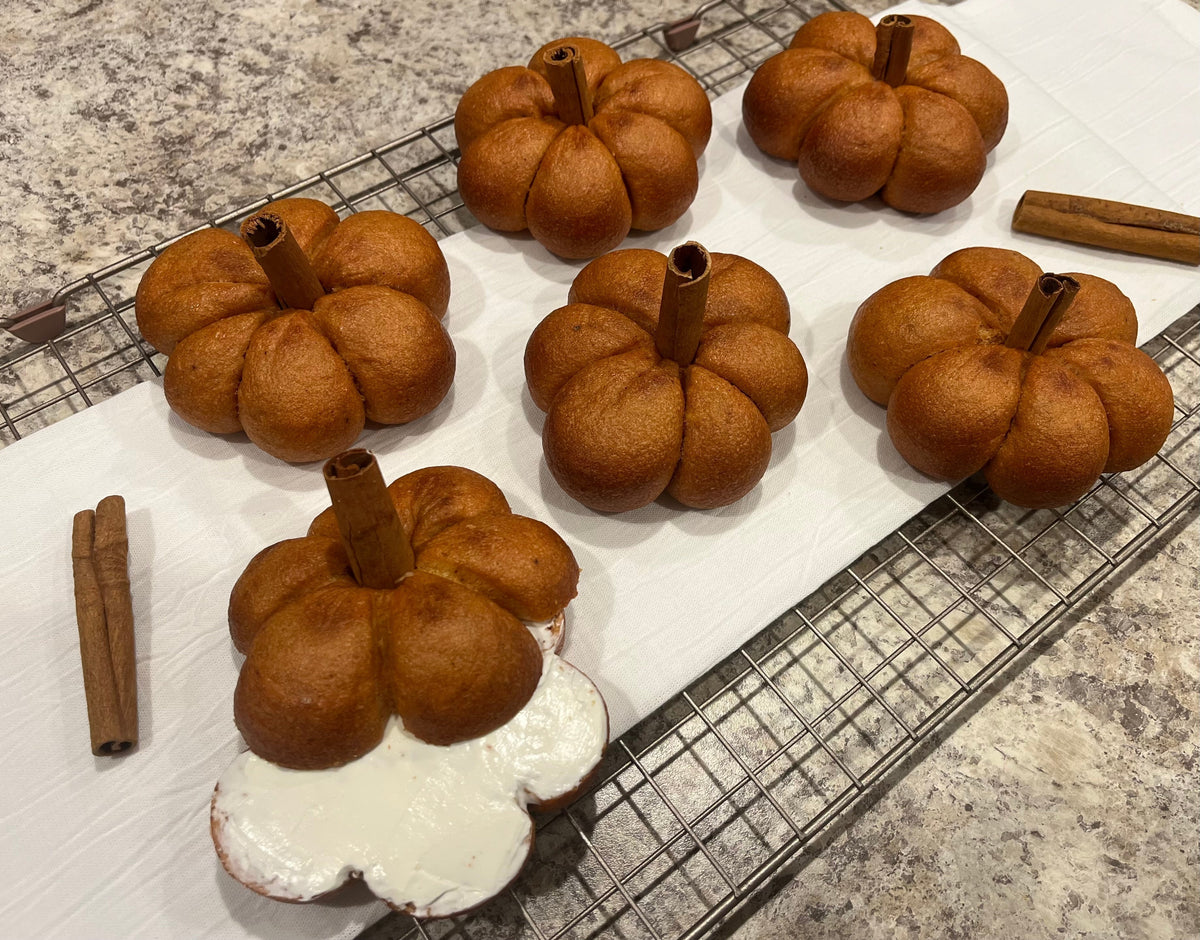
You can make a bagel taste like fall without giving up the chew. These are real boiled, board-baked bagels with canned pumpkin worked into a stiff dough, tied with twine so each ring bakes into a ribbed little pumpkin, cinnamon stick in the center for a stem. I developed the recipe in my Colorado Springs kitchen this September, and the batch in these photos is the one every number below comes from. Two days, like any real bagel. Dough and tying the first, boil and bake the next morning.
Why this recipe works
Pumpkin puree acts like water and flour at the same time. Its moisture loosens the dough while its solids bulk it up, so a one-for-one swap against water doesn't work; the puree's water is real water, and the recipe has to pay for it somewhere. Here that means 210 grams of puree against just 145 grams of water. Even then, the scale only gets you close. Judge the finished dough with your hands, and if it feels slack, hold back water on the next batch. A batch of blueberry bagels that baked out flat taught me this lesson first.
The twine has its own lesson. Dry string welds itself to the crust, and pulling it off tears the surface you spent two days building. Soak the strands in canola oil before you tie and they release clean.
Ingredient notes
The card below calls for high-gluten flour at 14 percent protein or better; mine is King Arthur Sir Lancelot. The puree is canned, and the ratios assume it. I use Great Value, and the label to check is 100 percent pumpkin, not pie filling. Roast your own and the water content shifts, so plan on adjusting by feel.
The food coloring is optional. Eight drops of yellow and four of red went into the photographed batch; skip them and the bagels bake out a duller orange, nothing else changed. Decide before the dough comes together, because the color goes into the liquid, not the flour.
Activate the yeast
Whisk the lukewarm water, sugar, and active dry yeast together in a measuring cup until everything dissolves, then give it about 5 minutes to turn foamy before it goes anywhere near the flour. If you're coloring, do it now. Whisk the drops into this liquid; color carried in the water spreads evenly through the dough.
Mix and rest
Combine the flour, pumpkin puree, salt, and pumpkin pie spice in the mixer bowl. Pour in the yeast liquid and knead on low for 10 minutes, until the dough is stiff, smooth, and elastic. It will feel drier than most doughs you've handled. That's right for a bagel. Cover the bowl and rest the dough 5 minutes, just long enough for the gluten to relax before shaping.

Shape
Six pieces, about 135 grams each. Shape them with the rope method; the card below walks through the motion, and the measured comparison of shaping methods is its own article. Set the shaped bagels on a parchment-lined sheet, cover, and rest 30 minutes while the twine soaks.

Tie the pumpkins
Cut 18 strands of food-safe butcher's twine, 8 inches each, and soak them in canola oil while the bagels rest. Lay three strands in a star on the counter and set a bagel in the center. Bring each pair of opposite ends together over the top and tie. Three knots per bagel. Snug enough to hold, never enough to crush: the twine should press visible creases into the sides while leaving the dough room to grow into them through the proof and the overnight ferment.


Proof and the float test
Let the tied bagels sit at room temperature for about an hour. Float one, twine and all. Drop it into a bowl of cool water, and if it rides the surface, the whole tray is ready for the fridge.
Cold ferment
Cover the tray tightly and refrigerate 16 to 24 hours. Flavor is fridge work. These get the same long cold night the plain version gets.

Boil
An hour before baking, preheat the oven to 450°F with a baking stone inside. I bake these on the stone, not the steel; the steel was over-browning them. If a steel is what you have, expect more color underneath. Soak your bagel boards in cool water for 2 minutes right before the boil. Bring 10 cups of water and 15 grams of baking soda to a simmer, and keep the pot gentle rather than rolling. My usual pot gets barley malt, but malt browned this crust right past the orange; the soda still builds a crust without burying the color. Straight from the fridge, into the pot. Thirty seconds per side. Thirty is where my boil has landed lately for a deeper crust, and it holds here.

Bake on the board and flip
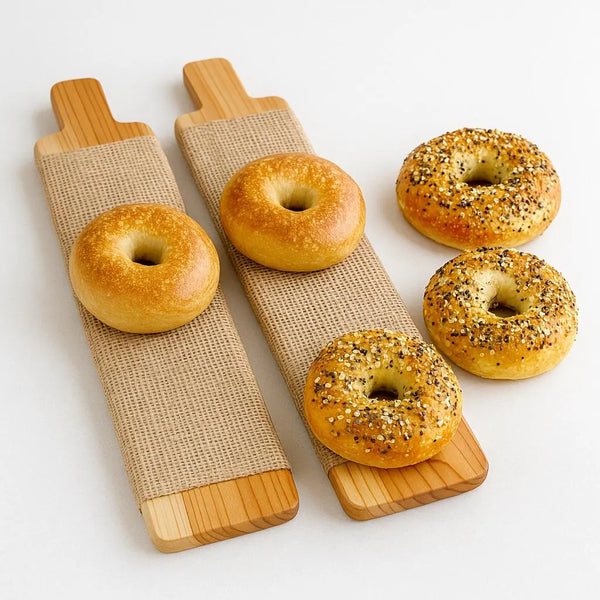
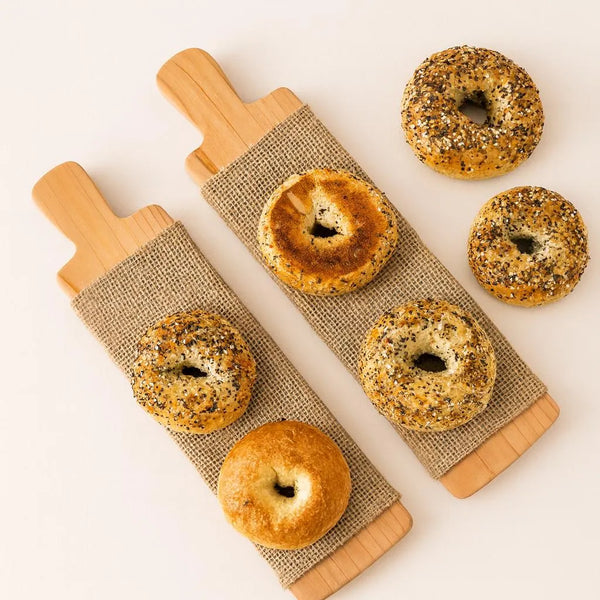
Set the boiled bagels top-side down on the wet boards and slide the boards onto the stone. Seven minutes there. Then flip the bagels off the boards onto the stone and give them 12 to 14 more, rotating them halfway, until they're deep golden through the creases. Those first minutes on wet cedar are steam minutes: the board keeps the surface soft while the ring finishes swelling, creases and all. Why that trade works is the whole argument of our Why Bagel Boards page.

Finish
Cool the bagels on a rack. While they're still warm, snip the twine and pull it away gently, then push a cinnamon stick into each center hole for the stem. The stick is a decoration, not a snack; it comes out before anyone takes a bite. Let them cool completely before slicing.

Where to go next
The base recipe: for the plain version of this process, start with the Authentic New York Bagel Recipe.
The method: the steam-and-flip these pumpkins baked on is covered on the Why Bagel Boards page.
The gear: every board in these photos is a Classic or a Signature, both in the boards collection.