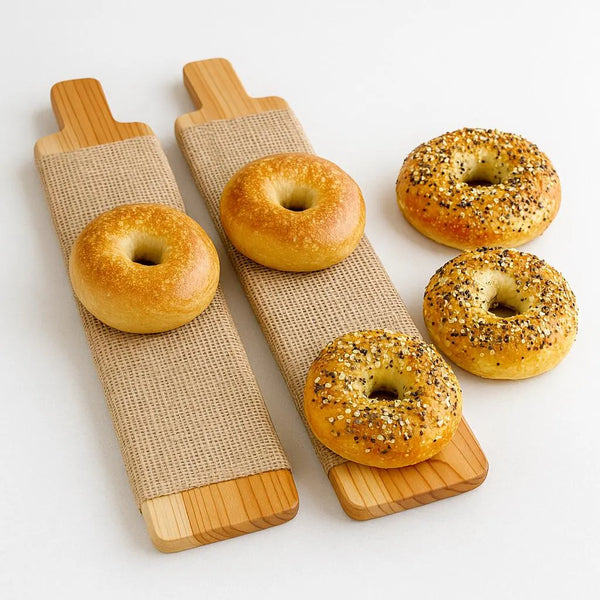
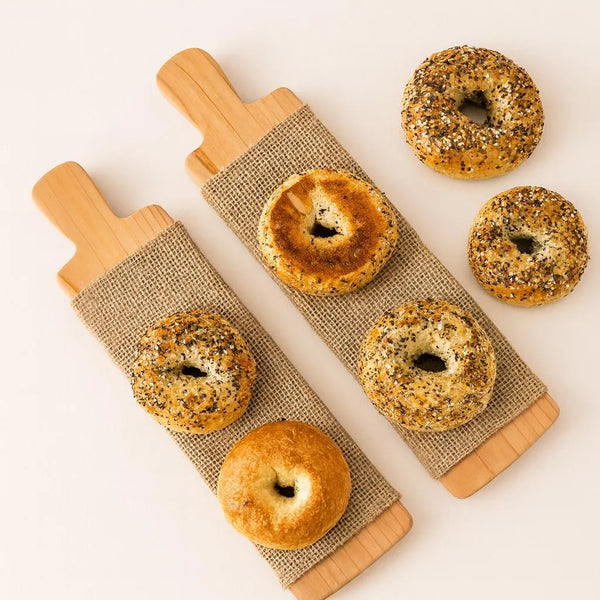
Why cedar, not a cookie sheet
Metal pans push dry, direct heat into the dough. The bottom sets before the bagel can rise, and you get a flat base with a dense crumb. A water-soaked cedar board does the opposite: it steams the underside while the tops bloom, and then you flip the bagels onto the oven surface to finish. That flip is the New York upside-down method, and it is the difference between bread with a hole and a real bagel. If you got here searching for bagel proofing boards: same burlap-covered board, different name. Ours do their work in the oven. Bakeries run the same play on long production boards; ours are sized for a home oven and a weekend batch. (The full method, with photos: why bagel boards.)
Classic or Signature
Both are solid cedar with food-grade, oil-woven burlap and a built-in handle. The Classic's burlap is sewn on, the traditional build. The Signature's covers snap off, which makes cleanup the easy part: pop the burlap, rinse everything separately, snap it back on dry. When a cover eventually wears out years from now, replace the cover and keep the boards. Care for either takes a minute (first-bake guide).