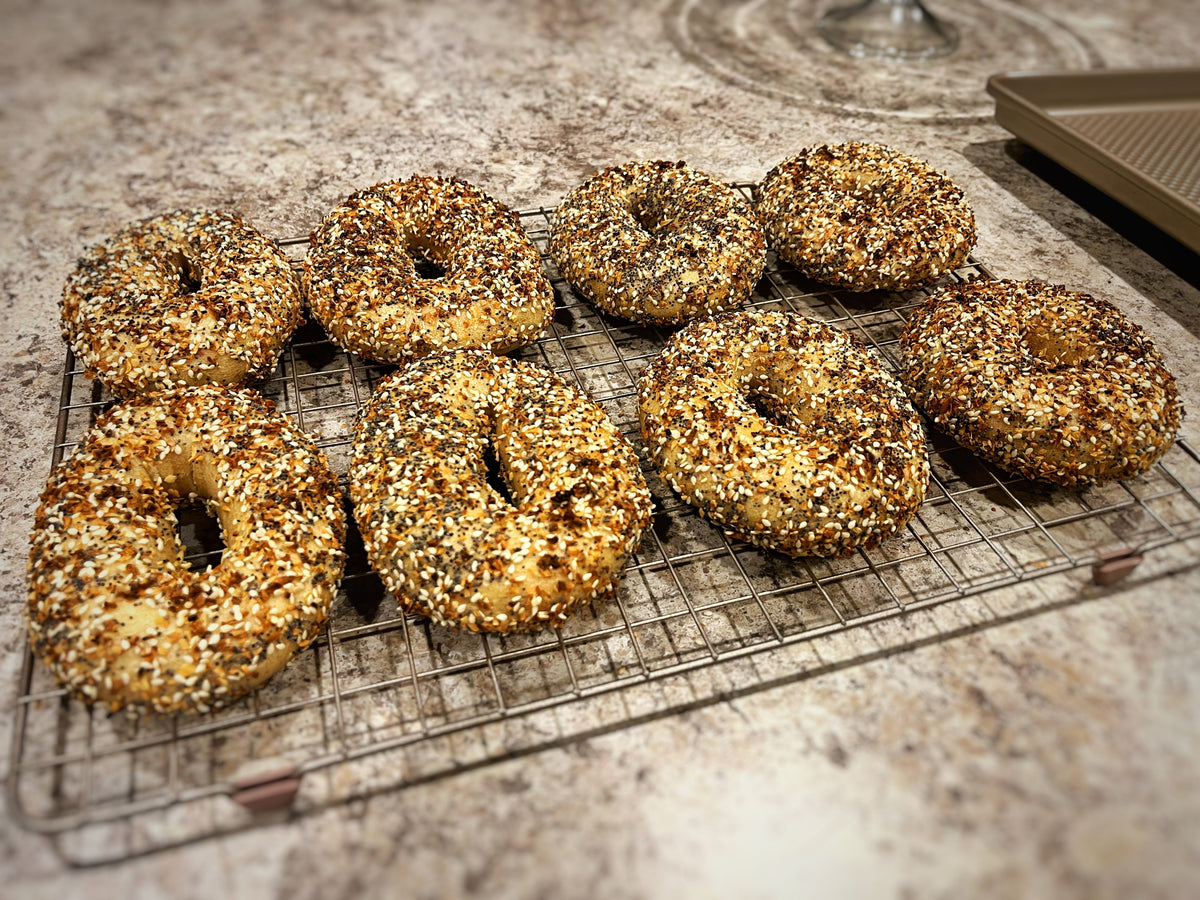
You seeded the bagels generously, and then watched the toppings end up everywhere except on the bagel: the sheet pan, the cutting board, the bottom of the toaster.
The fix isn't more seasoning. It isn't glue, either. Seeds stick when they meet a surface that's still wet from the boil, and they stay when neither side of the bagel bakes long enough to burn them loose. Below is the routine I run on my own everything batches: when to seed, how to rescue a batch that cooled too fast, the bake that toasts the seeds instead of burning them, and the blend I mix myself, including the two ingredients I leave out on purpose.
Why seeds fall off
A bagel comes out of the boil wearing a thin, tacky layer of cooked starch. That layer is the glue. Press seeds into it while it's still wet and they set into the crust as it bakes. Wait too long and the surface dries, so the seeds sit on the bagel instead of in it, and anything that merely sits on a bagel ends up under it eventually.
Timing covers most of it, so that's where the routine starts.
Seed at the right moment
Straight out of the water, my bagels go onto parchment for about a minute, just until they're cool enough to handle. Then each one gets dipped into a bowl of seasoning and pressed in lightly. Dipped, not sprinkled. A sprinkle drops seeds onto the surface; a dip with a little pressure seats them in it while the starch layer is still soft enough to take them.
Don't treat the minute as a stopwatch number; the real window is "still tacky," and it's more forgiving than it sounds.

Both sides, not just the top
Most recipes treat everything seasoning as a top coat. I dip both sides. My everything bagels don't have a real top or bottom; whichever side I lay down first becomes the bottom, and the whole bagel wears the coat. It's twice the seasoning in every bite, and it only works because of how the bake below treats the underside.
If they've cooled: water, not egg wash
Life happens between the pot and the seed bowl. If the surface has dried past tacky, wet it again: a brush or a quick mist of water brings the stick back, and that's the whole rescue.
Egg wash works too, and plenty of baking sites will point you to it. I usually skip it. It can get messy, and plain water does the job most of the time. If you want the food-science version, the Modernist Cuisine team engineered a cornstarch-slurry coat for exactly this problem; same principle, starch as glue, taken to the lab.
Bake so the coat survives
Getting the seeds to stick is only half the problem. A seed coat can brown faster than the bagel under it, and everything seasoning is heavy on dried garlic and onion, which scorch easily.
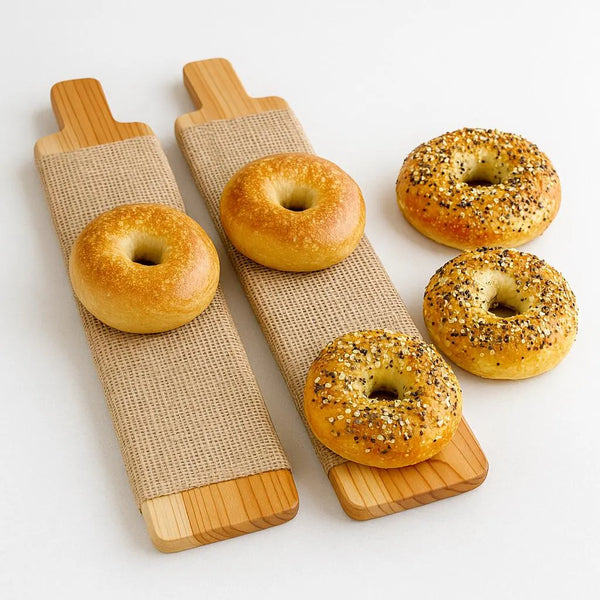
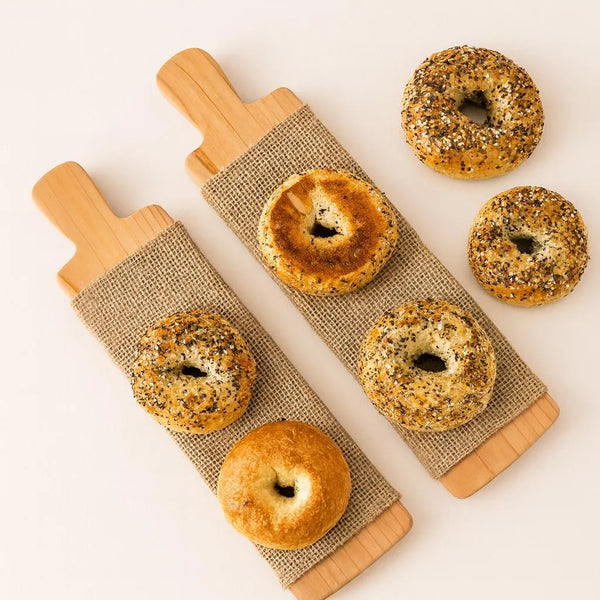
Here's my bake. The seeded bagels lie on soaked cedar boards, directly on the wet burlap, for the first seven minutes at 450°F. Soaked wood gives you a slow, wet heat, closer to a steam tray than a sheet pan, so the down side sets its seeds into the crust without burning them. Then I flip the bagels over to finish. Each side gets part of the bake instead of one side taking all of it, and that split is what makes a both-sides coat possible. This is the job our boards exist for; the full routine, soak times included, is on the Using Your Bagel Board page.

The clock is the least reliable part of that routine. Watch the seeds, not the timer, and shorten the board phase if the coat is browning too fast. Keep a spray bottle of water nearby too; a light mist over the tops cools the seeds and slows them from burning.
That also answers a question people ask: do you flip bagels when baking? Yes, once, when they leave the boards.
Fix the blend itself
My blend is equal parts of five things: dried minced onion, dried minced garlic, white sesame seeds, black sesame seeds, and poppy seeds. It's the exact blend we pack in our kits, and you can mix it yourself from the spice aisle.
Two things are missing on purpose. There's no salt; salt pulls water out of the dough's surface and dries the crust before it finishes rising. That same surface water is the glue from the first section, so a salty blend costs you twice. And the garlic and onion go in raw and dried, never pre-roasted; roasted aromatics burn quickly in a real bake.
Most jarred blends break one or both rules. Check the label before you blame your technique.
The shedding you keep
Even done right, an everything bagel sheds. I coat mine fully, both sides. More seasoning on means more will come off; the outermost seeds that never quite seated let go first. That isn't failure. The goal is a coat that's still on the bagel after the toaster.

Where to go next
The science: why wet cedar changes a bake at all is on our Why Bagel Boards page.
The gear: the Classic Bagel Board and the Signature Bagel Board live in the boards collection.
The bagel underneath: the dough, boil, and bake are all in the Authentic New York Bagel Recipe.
The shine: what the boil water is actually doing is in the crust guide.