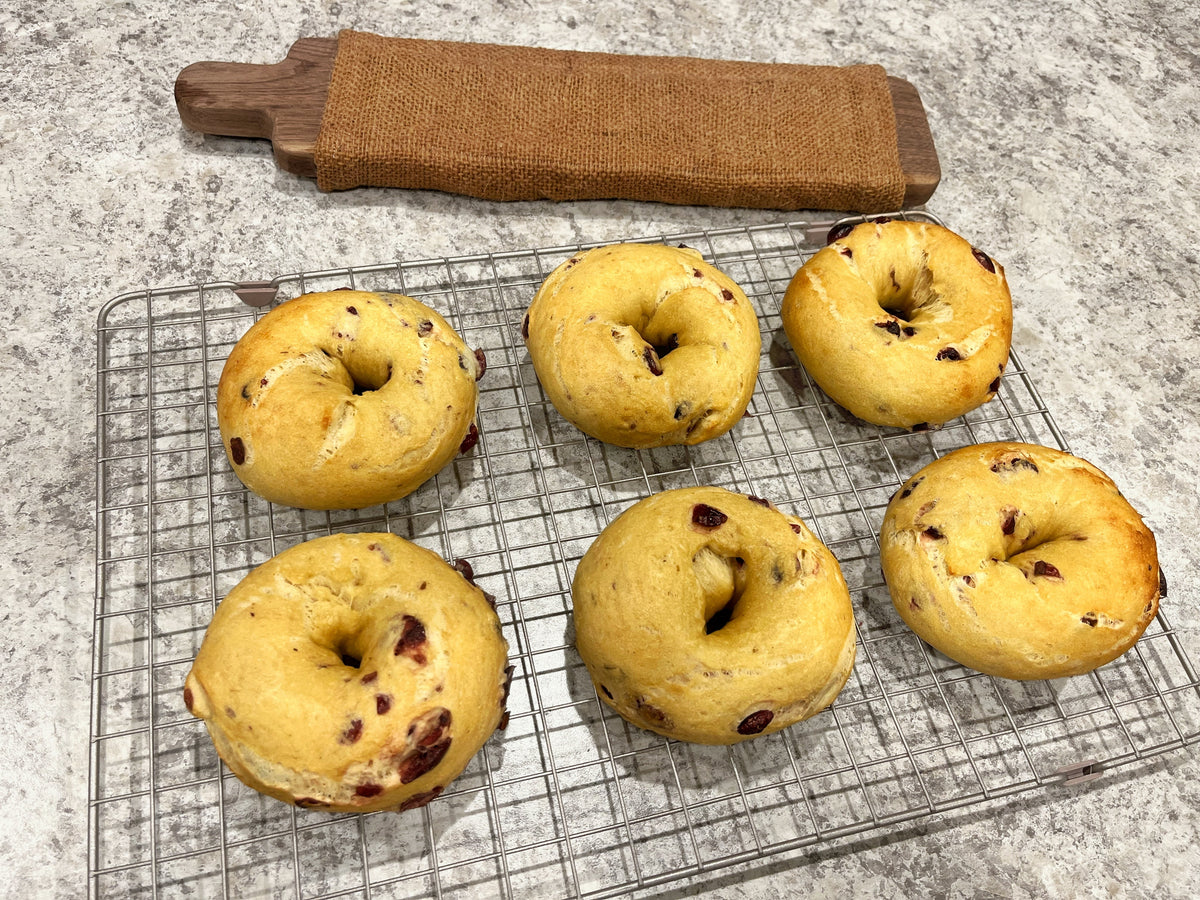
Last Christmas I pulled a batch of bagels out of the oven at 7:25 a.m. and my family was eating them by eight. Nobody gets stuck in the kitchen. The work had happened the afternoon before, about two hours on Christmas Eve, most of it hands-off. This is the make-ahead plan most breakfast lists don't know exists, because a bagel made the real New York way has to spend the night in the refrigerator anyway. Christmas Eve into Christmas morning is the exact window the method already calls for. Below is the plan I ran for six people: the Christmas Eve prep, the morning clock minute by minute, the holiday flavor everyone loved, and how to put out a bagel bar people actually finish.
The overnight wait is the recipe
Most make-ahead Christmas breakfasts are compromises. The casserole gets assembled tonight so it can be reheated tomorrow; the French toast soaks overnight because nobody wants to stand at a stove at dawn. Bagels don't compromise. After shaping, the dough goes into the refrigerator for a long cold proof, 16 to 24 hours in my kitchen, and that rest is where the flavor develops; skip it and you've made a roll with a hole. The night that other recipes treat as a holding pattern is the night this recipe requires.
Christmas Eve: two hours, mostly waiting
I start the dough at about 1 p.m., and after the rise I shape the rings. By 2:30 or 3 the shaped bagels pass the float test (drop one in water; a fully proofed bagel floats), and the moment they pass they go into the fridge. Cover the tray. That is the entire day of work. The oven never turns on. If the dough is coming from one of our bagel making kits, the measuring is already done for you; the mix arrives weighed, malt included, which turns the 1 p.m. step into opening a bag.

The only other planning is real estate. The shaped bagels ride out the night on whatever tray they were shaped on, and that tray needs a full shelf in a refrigerator having its busiest week of the year, so clear the space before the ham claims it.

The Christmas morning clock
Here is the plan for six people, on last year's clock:
- 6:00. Up. Oven on at 450°F, with the baking steel inside if you own one. The boil pot goes on the stove.
- 6:45. Boil, two bagels at a time, 20 seconds a side, straight from the fridge. Each pair comes out of the water and onto soaked cedar boards.
- 7:00. Boards in the oven.
- 7:07. The flip. Tip each board and the bagels roll off onto the steel to finish right side up.
- 7:25. Done. Onto a cooling rack.
- 8:00. Cooled enough to slice, if your family can hold out that long. Ours usually can't.
That is ninety minutes. It's mostly waiting: for the preheat, for the boil, for the bake, for the cooling rack.

The boards are why raw dough and a 450°F oven get along at 7 a.m. We build them in our Colorado Springs workshop, and their job in this plan is mechanical: the wet cedar shields the dough from the hot metal while steam coming off the burlap sets the surface. The full mechanics are on our Why Bagel Boards page.
If the schedule needs to bend
The cold proof forgives a lot. My typical window is 16 to 24 hours, but it extends to 48 with no problem, which means the dough can be a December 23 project if Christmas Eve is spoken for, and a lazy 10 a.m. brunch bake works as well as my 6 a.m. one.
Why I bake morning-of
You could bake everything on Christmas Eve and rewarm it in the morning, and plenty of make-ahead plans will tell you that the smarter play is exactly that. I won't. Nothing beats a fresh bagel; reviving one just never hits the same. The morning cost is ninety minutes you barely touch, and on Christmas of all mornings, fresh is the point.
Last year's batch: orange cranberry
Plain and everything are the safe calls, and there is nothing wrong with them. But it was Christmas. Last year I went holiday-first: orange cranberry bagels with a honey walnut schmear I whipped myself. Six of us ate them and everyone loved them. We took a few with us when we walked the Christmas markets. A citrus-and-fruit bagel with a sweet schmear reads like a centerpiece and adds no time to the plan; the cranberries fold in at the mix, and the schmear can be whipped on the 24th while the dough rises.

How much to put out
One bagel per person. Homemade bagels run bigger than store-bought, and on Christmas morning they share the table with fruit and eggs and whatever came out of the stockings, so people rarely eat more than one. Bake past that number if you want leftovers.
Schmears: plain, plus one interesting one. Everyone eats plain, flavored splits the room, and lox splits it harder, so I would rather serve two schmears well than six half-eaten ones. I skip the sliced avocado entirely.
Setting out is simple. If the table is crowded, our bagel stand racks the whole batch upright on a single rod in a sliver of table space; otherwise a cutting board and a couple of bowls are the entire setup.
If the kit is the gift
One honest note for gift-givers: if you got a kit on Christmas, you are not making Christmas breakfast. Technically you could unbox at 8 a.m. and eat bagels by noon if you skip the cold ferment. Don't. That overnight rest is where the flavor comes from. The better plan is the one this article is built on, shifted a day: make the kit the Christmas-afternoon activity, after the presents and the big meal, and follow the same day-before schedule. The giver watches the gift get used, and the house gets tomorrow's breakfast.
Where to go next
The Bagel Making Kit: the pre-measured mix and cedar boards for running this plan.
Authentic New York Bagel Recipe: the full method behind the Christmas Eve steps, measurements included.
Gifts for Bagel Lovers: for the person putting the kit under the tree this year.